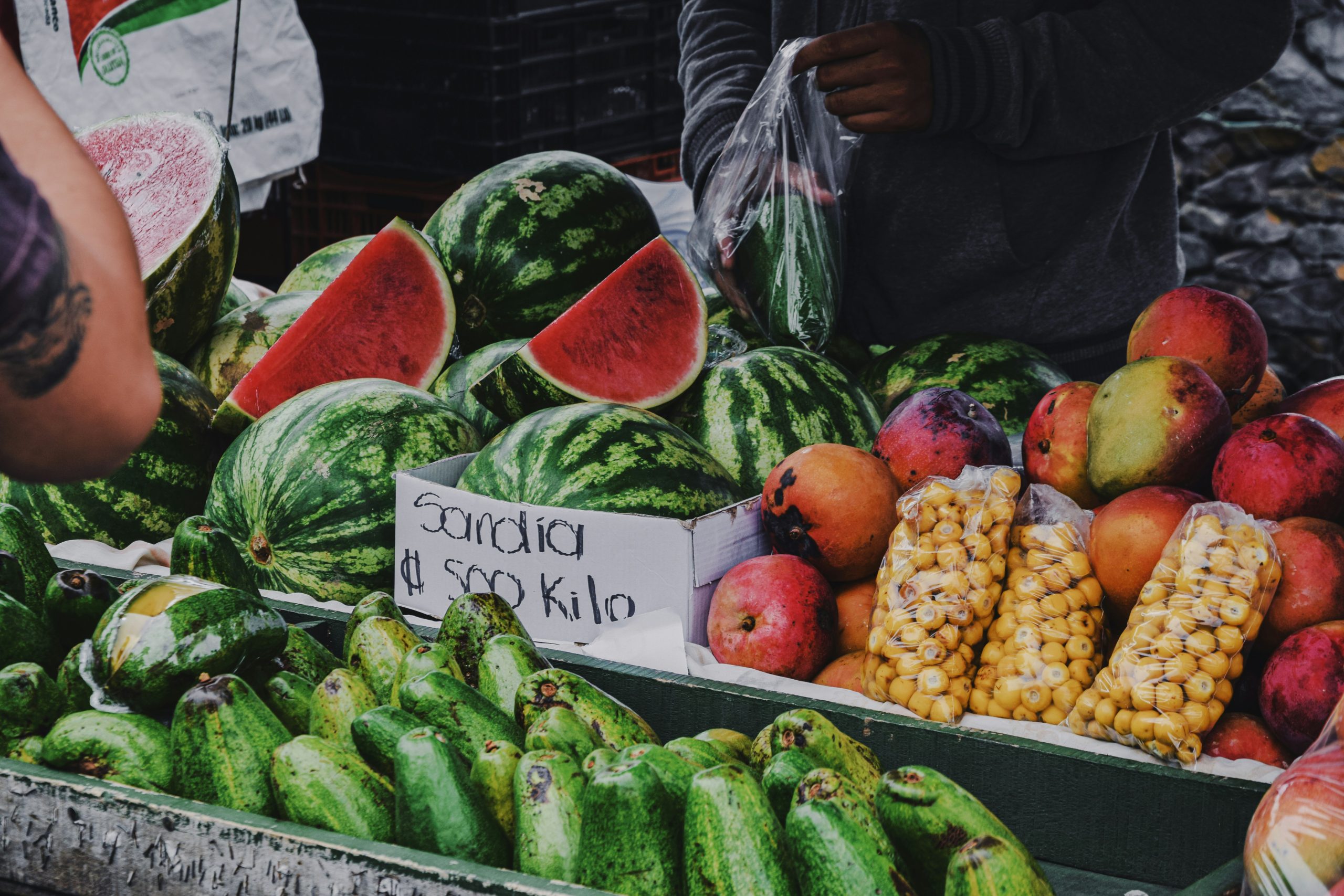

I suspect you already know how climate risk affects our food systems. We can all imagine how a wheat harvest in one region travels through a global supply chain, through milling, processing and logistics until it becomes a crisis in a country that is entirely reliant on imports for that most fundamental of grains. When a major harvest fails, global prices spike. When prices spike, people notice.
Fashion faces a structurally similar set of risks, but almost none of the same urgency. The geography of production is concentrated in some of the most climate-exposed regions on earth. The value chain is long, opaque and deeply interdependent, and the businesses at its centre sit at the furthest possible remove from the physical realities embedded in it.
The critical difference from food is not one of scale but of consequence. When grain harvests fail, food prices spike, governments fall and the IMF convenes. Nobody goes hungry when a coat fails to arrive, or when a fashion brand posts disappointing quarterly results. The moral distance between a disrupted dyeing cluster and a poor financial result is (understandably) so long that the underlying physical cause is rarely named and even more rarely addressed.
“Nobody goes hungry when a coat fails to arrive”
But anyone with a cultural or financial interest in the world of fashion should recognise that the fashion industry faces a structurally similar set of risks to our food systems. Nor do these risks discriminate, affecting everyone from the fastest of fast-fashion brands to the highest of luxury houses.
In this article, we’ll explore why the fashion industry is more exposed to physical climate risk than it first appears, how climate risks cascade through the fashion value chain and how fashion brands can take the first step towards building resilience.
A quick note on scope: the fashion industry faces substantial climate-related transition risks, from regulation, shifting consumer expectations, green claims legislation and mandatory supply chain due diligence. That risk is real and growing, but it is a subject for another article. The focus here is on physical climate risk: what rising temperatures, changing precipitation pattern, and more frequent extreme weather events do to the physical systems on which the fashion industry depends.
Why fashion’s business model makes it particularly susceptible to physical climate risks
While each layer of the fashion supply chain faces specific risks from climate change (more on those later), it’s worth dwelling on some of the structural features that shape the industry’s inherent vulnerability.
Geographic concentration. Let’s start with an obvious one: the fashion supply chain is very poorly distributed. Cotton production is clustered in a handful of regions, particularly Pakistan’s Indus basin, Uzbekistan’s river-fed plain and the American South. These just so happen to overlap with some of the highest climate risk zones on the planet. Textile dyeing and finishing are even more concentrated, dominated by a small number of river-basin clusters in South and East Asia. Garment assembly follows a similar pattern, with Bangladesh, Vietnam, and Cambodia together accounting for a disproportionate share of global apparel exports. Concentration of this kind is efficient in stable conditions, but the reliance on regions that are highly susceptible to climatic instability turns an isolated risk into a systemic vulnerability.
Long forward planning cycles. Fashion typically operates on a 12 to 18 month horizon. Brands commit to volume and specification far in advance of the selling season, purchasing fabric, placing manufacturing orders and booking logistics capacity on the assumption that conditions at the point of production will be roughly similar to conditions at the point of order. That assumption has always held more or less true, but is already becoming less reliable. As climatic conditions become less stable, a system designed for predictability will increasingly be tested in conditions of growing volatility.
Supply chain opacity. Like many industries, fashion brands have reasonable visibility of their Tier 1 suppliers. In most cases, these are the factories that cut and sew the garments they sell. Very few have meaningful visibility of the rest of the supply chain: the mills that produce the fabric, the facilities that dye and finish it or the farms that grow the fibre. The practical consequence of this opacity is that brands are rarely able to locate their own climate exposure. The inability to accurately identify points of risk or understand how they might impact production represents a systemic challenge.
The great cascade: how climate risk affects the entire fashion value chain
The fashion industry’s systemic risks exacerbate the significant physical risks at each level of the supply and value chain, from the production of raw fibre through to the final customer.
Raw fibre
Almost every fibre, natural and synthetic, face vulnerabilities to climate risk. There are detailed studies of the impact of climate change on almost every fibre used in clothing, but here are just a couple of the most important examples:
Cotton is extraordinarily sensitive to heat and water availability. The 2022 Pakistan floods, driven by a combination of glacial melt and an intensified monsoon, destroyed more than a third of the country’s cotton crop in a single season. Pakistan produces around five per cent of global cotton output and its loss sent ripple effects through spinning mills across South Asia. Meanwhile the US South, another major producing region, faces increasing heat stress during the critical boll development phase and the southern High Plains portion of the Ogallala aquifer, which irrigates much of the American cotton belt, will approach depletion in decades at its current rate of decline. Regions which for so long have been relied upon to grow a steady, cheap supply of cotton are increasingly threatened.
Perhaps less obvious is the risk to synthetic fibres. Polyester and nylon, which collectively account for more than two thirds of all fibre production globally, are derived from petrochemical feedstocks. Petrochemical infrastructure is concentrated along coastlines and river deltas, making it vulnerable to flooding and storm surge. Refineries and cracker facilities are also energy-intensive and sensitive to grid instability, particularly in the countries where they have traditionally been concentrated. The assumption that synthetic fibres provide a reliable climate-independent alternative to natural fibres does not stand up to a proper understanding of climate risk, even before the transition impacts on petrochemical derivatives is considered.
Yarn and fabric production
Spinning and weaving tend to follow the geography of fibre production, with facilities situated close to the fields and factories producing raw natural and synthetic fibres. This means that they share many of the same physical risks, compounding the impacts of increasingly likely climate events. What is less commonly considered is that these are among the most highly energy-intensive processes in the fashion supply chain, dependent on stable and affordable electricity. As climate events stress power grids, through peak demand during heatwaves, damage to transmission infrastructure and the cascading effects of flooding on power stations, manufacturing facilities face operational disruption even when they are physically undamaged. A factory may be well protected, but without power it produces nothing.
Dyeing and finishing
In all our conversations with fashion procurement teams, this remains the most underappreciated step in the fashion supply chain from a climate risk perspective. Textile dyeing is extraordinarily water-intensive. A single kilogram of dyed fabric can require anything between 30 and 500 litres of water to process depending on the fabric type, process and dye. The world’s dyeing and finishing clusters, from the Pearl River Delta in Guangdong to the Narayanganj corridor in Bangladesh, are built around river systems that are under increasing stress from changing precipitation patterns, glacial retreat and competition for water between industrial, agricultural and domestic users.
In some ways, this risk is even more profound than what happens in the fields and factories upstream. Cotton fields can, in theory at least, be relocated. River-dependent dyeing clusters cannot. The infrastructure is fixed, the water dependency is total and the alternatives are limited. A multi-month drought or contamination event affecting one of these clusters has the potential to hold up production across every brand that depends on it, regardless of where the fabric is produced or the garments are assembled.
Garment assembly
Within fashion procurement, Bangladesh, Vietnam and Cambodia have become the most widely recognised and well-discussed places at severe risk from climate change. Coastal flooding, cyclone intensity and rising sea levels threaten infrastructure, while wet-bulb temperatures approaching the limits of safe working threaten worker productivity and health. The International Labour Organization has estimated that productivity losses from heat stress in the agricultural and manufacturing sectors of South and South-East Asia could be equivalent to tens of millions of full-time jobs by 2030.
What receives less attention is the adaptation gap. The regions that carry the most physical risk also tend to be those with the least institutional and financial capacity to adapt.
Logistics
Shipping routes are not passive infrastructure. They are geographically determined, physically constrained and increasingly exposed to a range of challenging climate dynamics. The Straits of Malacca, through which the majority of fashion’s Asian production must pass, sit at the intersection of typhoon risk, sea level rise and the compounding climate vulnerability of the port cities at either end. The increasing risk of drought on the Panama Canal (whose vulnerability was demonstrated in 2023 when significant draft restrictions were applied) constrains the rerouting options that brands might otherwise rely upon in a crisis.
Retail and demand
The final node is the least discussed in physical climate terms, but carries real financial significance. Fashion’s volume-forward buying model, committing to large quantities of seasonal stock months before the selling season, rests on the assumption that seasons are broadly predictable. That assumption is eroding fast.
Warm winters damage sell-through on outerwear; cold springs delay the transition to summer ranges; unseasonable heat spikes demand for stock that has already been marked down. While none of this is catastrophic in isolation, the repeated disruption to carefully calibrated pricing models creates pressure when margins are already tight.
The financial model of many fashion brands can absorb a seasonal shock or two, but it has not been designed to cope with consistent inconsistency.
When the Pearl Water Delta dries up: a real-world scenario
Abstract supply chain analysis is all well and good, but it only gets you so far. Let’s imagine for a second what a real cascade actually looks like, from a physical event to real financial impact.
It is spring 2027. A prolonged drought across Guangdong province has, over three months, cut water availability in the Pearl River Delta to well below seasonal norms. The dyeing and finishing clusters that process a significant share of Asia’s export fabric begin rationing water allocations between facilities. Higher-margin orders are prioritised and mid-market volume orders, the kind that fill the shelves of European and American retailers, are pushed back. Some facilities reduce operating hours. A handful shut temporarily.
Brands with fabric orders in the pipeline receive delay notices. Procurement teams escalate. Some attempt to redirect orders to alternative dyeing facilities in Bangladesh and India, which are already running at capacity. Lead times that were tight become impossible. Garment factories in Dhaka and Ho Chi Minh City and now waiting on fabric that has not arrived and begin falling behind on cut-and-sew schedules. They were already managing rising summer temperatures that are pushing effective working hours earlier in the day.
The brand’s options are now all expensive. They could air-freight the fabric when it finally clears and absorb the margin hit on those SKUs. Alternatively, they could accept the late deliveries into a shortened selling window and markdown earlier. If things get really rough, they may even cancel orders, take the inventory write-down and enter the autumn season with gaps in the range.
By the time this appears in a quarterly results presentation, it will be described as supply chain disruption, elevated freight costs or challenging trading conditions. It will not be described as a drought. The causal chain from reservoir levels in Guangdong to a margin miss reported in London or New York is real and traceable, but almost never traced.
This is how physical climate risk tends to arrive in fashion. They are almost never described as catastrophes, but as a cluster of ordinary-looking commercial problems, spread across a chain that most brands cannot fully see. In food systems, the signal from a harvest failure is fast, loud, and visible. In fashion, the equivalent signal is slow, diffuse, and arrives dressed as underperformance. By the time it is visible, the decisions that could have mitigated it are long past.
“The causal chain from reservoir levels in Guangdong to a margin miss reported in London or New York is real and traceable, but almost never traced.”
So what can you to do manage the risk?
Until very recently, very few fashion brands designed their information architecture to understand physical climate risks.
Brands know their Tier 1 factories. They do not systematically know where their fabric comes from, which river their dye house depends on, which aquifer feeds their cotton supplier’s irrigation system or which coastal road their logistics provider uses when the highway floods. This means that they routinely make sourcing decisions and create financial forecasts on the assumption of stability in a supply chain that is largely opaque at best.
The question for fashion businesses is whether they understand their physical climate risk exposure to be able to make strategic decisions with confidence.
The good news is that the first step to addressing these very real risks is much more achievable than it might appear.
Brands do not need to solve supply chain opacity overnight to begin managing physical climate risk meaningfully. Mapping Tier 2 and Tier 3 suppliers for the highest-volume product lines can reveal where the most material exposures sit. Understanding the specific risks affecting each of those suppliers and how these could affect production can help identify the nodes where disruption is most likely and most consequential
From there, the options are familiar to every fashion buyer: supplier diversification away from single climate-stressed geographies, contingency sourcing arrangements, adjusted inventory buffers for climate-exposed categories and scenario planning that treats climate disruption as a foreseeable operational risk.
The brands that take these first steps will not be immune to physical climate risks, but they will be significantly better prepared than their competitors when climate events disrupt vulnerable supply chains.
Understanding your true exposure to climate risk is complex but achievable. If you’d like to explore how to identify, quantify and manage climate risks across your value chain, Sirocco can help.